
She Works. New Paths to Empowerment in Ethiopia
Background
Ethiopia, with a population of approximately 126 million, is the second most populated country in Africa and has a very young population, yet one marked by deep gender inequalities. Women, although representing 49.8% of the population, remain disadvantaged in social and economic spheres. Urban youth unemployment is high (27.2%) and affects women in particular, with a rate of 35%—about twice that of men; in Addis Ababa it reaches 30%. Moreover, only 38% of women have autonomy in decisions regarding sexual and reproductive health, and many resort to migration due to a lack of opportunities and social models that are strongly influenced by patriarchal structures.
Ethiopia’s ten‑year development plan aims to reduce the gender pay gap and promote women’s entrepreneurship, while sectors such as textiles and agro‑industry—particularly coffee—offer significant prospects for economic growth and exports. However, women and young people continue to face barriers to accessing employment and starting businesses due to bureaucracy, lack of support services, persistent gender stereotypes, and a mismatch between education and labor‑market needs.
For this reason, it is necessary to strengthen training centers by improving their quality, technological innovation, and gender‑sensitive approach, through investments in machinery, software, and skills development in key sectors. It is also essential to provide adequate training for instructors and trainers, and to develop entrepreneurial and transversal skills, especially for the most vulnerable women, who often have limited familiarity with digital financial tools.
More generally, women in Ethiopia still face structural barriers to accessing resources, credit, and education. Promoting a real socio-economic inclusion requires not only training, but also adequate support services, and a cultural a cultural change that fosters awareness of rights and the empowerment of women.
Goals
General Objective
Contributing to employment development and micro‑entrepreneurship among women and young people, and to the creation of an enabling environment for their participation in the labor market in Ethiopia.
Specific Objective
To facilitate access for women and youth in urban Addis Ababa to active job‑search opportunities, employment, and micro‑entrepreneurship in high‑potential, competitive market sectors, within an environment that supports women’s economic empowerment.
People involved
7.020 people, including WISE staff, professional training centers (TVET) in the food and textile sectors, both governmental and non-governmental), Coffee Training Center (CTC), Creative Hub, and women and young people between 18 and 50 who are in vulnerable situations..
AIDOS activities
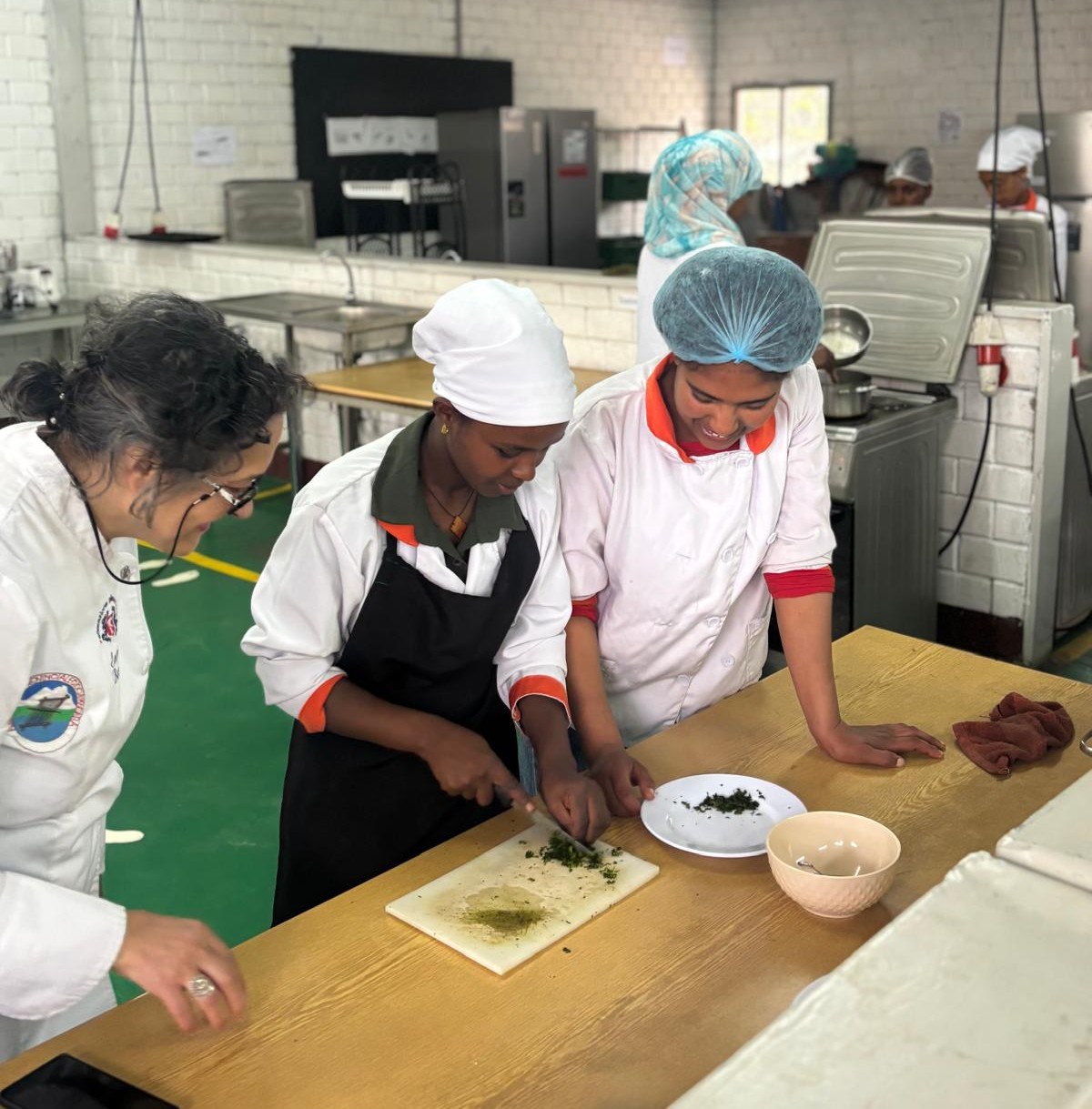
AIDOS will coordinate the initiative and will carry out the modernization and strengthening of training centers through the purchase of equipment and materials, and will provide technical assistance and training for trainers working at the centers. It will furthermore conduct a market analysis in the Addis Ababa area in order to adapt the training programmes to actual labor-market needs, and to ensure that the skills acquired are directly applicable, with a focus on textiles, tailoring, and food processing.
Expected Results
- Strengthening the skills and capacities of civil society and government training centers to promote employment and micro‑entrepreneurship opportunities through a gender‑responsive approach.
- Strengthening women’s and young people’s capacities to access employment and create enterprises
- Reducing barriers to women’s economic empowerment.
Who is financing
The Italian Agency for Development Cooperation (AICS) contributes with €1.976.000, which is 94,95% of the total cost. The contribution of AIDOS and WISE is €105.000,00, which is 5,05% of the total cost.