
Improving food security and resilience of small and medium-sized enterprises (SMEs) led by women in the Gaza Strip through food baskets and community-led solidarity marketing (CLSM)
Background
The Gaza Strip is facing an unprecedented humanitarian crisis. According to the last report of the Famine Review Committee (FRC) and the Integrated Food Security Phase Classification (August 2025), an actual famine is going on. Essential food procurements as well as WASH (water, sanitation, and hygiene) services are severely insufficient. Deaths related to malnutrition are increasing and disproportionately affect women and children, older people, and people with chronic illnesses. FAO simulations indicate that the majority of Gaza population suffer from severe caloric deficiencies.
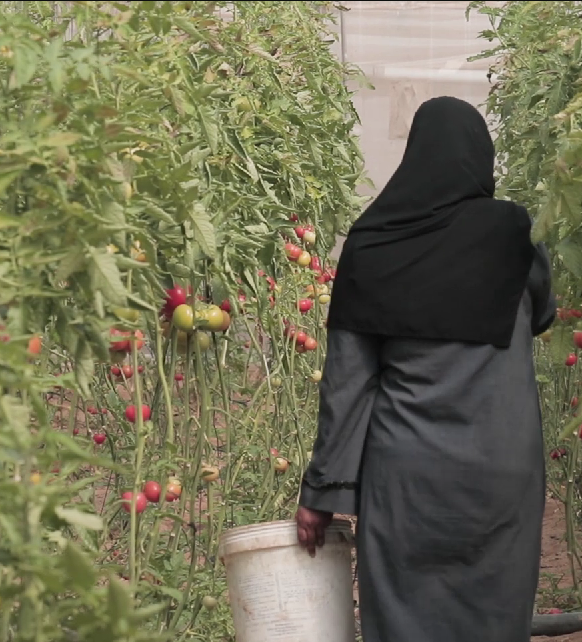
In this context, urban family agriculture – and especially small and medium-sized enterprises (SMEs) led by women – has a fundamental role in re-establishing local food production and in reinforcing community resilience. The Urban Women Agripreneurs Forum (UWAF), facilitated by Gaza Urban and Peri-urban Agriculture Platform (GUPAP), has mobilized urban women agro-enterpreneurs who are involved in food processing, plant production, and animal production in humanitarian safe zones of the central and southern areas of Gaza
According to GUPAP’s estimates, traditional and small urban agricultural lands that are currently accessible in safe humanitarian areas are only 5% of those accessible before the war. The 80% of these SMEs run by families are in the central and southern area, while 20% is in Gaza. Their functioning is crucial for the survival of families and for the entire food system in the Gaza Strip.
Objectives and involved actors
Women-led enterprises who operates within UWAF face multiple obstacles, among which continuous blocks of initiatives, the lack of safe structures for storage and processing, interruptions of supply chains, and an increase of malnutrition. The initiatives of community-led solidarity marketing (CLSM) respond to these critical issues, and have the double benefit of supporting the entrepreneurs and of distributing essential food supplies to vulnerable families, as fresh leafy greens, locally produced processed foods (cheese, za’atar, tahini), baked products, and animal products (eggs and honey).
By reinforcing the productivity of SMEs with interventions tailored at food security, GUPAP contributes to provide a direct and community-led response, which re-establishes the means of subsistence and reduces the risks related to food insecurity. This approach, based on autonomy and rooted in the Gaza territory, is especially relevant in the current context, where external human intervention in especially limited, if not prevented. Therefore, the food distributed to families does not come from outside the Gaza Strip, but it is entirely produced and processed by women agro-entrepreneurs, and distributed within communities.
The “solidarity food baskets”, which are the main intervention of this project, are designed not only for providing essential nutrition, but also for promoting sustainability and resilience of enterprises led by women. The model allows women entrepreneurs to continue producing, thanks to a reliable market, linking economic support to humanitarian results.
In this way, GUPAP’s intervention during the crises in Gaza have allowed women agro-entrepreneurs to continue the production, to access local markets, and to generate income, even with severe supplies’ interruptions and limited access to agricultural inputs.
Expected Results
- To restore the functioning of 100 SMEs led by women, contributing to the income of families, and to local food production.
- The solidarity food baskets will reach around 400 families (around 2.000 people), guaranteeing an immediate nutritional support.
- To reinforce the community’s cohesion and resilience through coordination and participation of the production and distribution process, led by UWAF and GUPAP.
- To reinforce the local agricultural capacity and continuity during crises.
Who is financing
Italian Buddhist Union (UBI), through “8xmille” funds