
Women’s conferences
World conferences on women were held in Mexico City (1975), Copenhagen (1980), Nairobi (1985) and Beijing (1995).
The theme
In 1975, the First World Conference on Women was held in Mexico City, during which the United Nations proclaimed the “Decade of Women” (1976-1985). The event was attended by 1,200 official delegates, while the Non-Governmental Organisations (NGOs) Tribune was attended by around 4,000 women, mainly North American and European, but also Latin American. During this conference, significant differences already emerged between the women from the North, who mainly spoke about equal rights, and those from the South, who were more focused on material oppression. Two important documents were adopted: the Declaration on Women’s Equality and the World Plan of Action.
In 1980, the Second World Conference, dubbed the “mid-decade” conference, took place in Copenhagen. On this occasion, 51 countries signed the International Convention Against All Forms of Discrimination Against Women (CEDAW). The concept of equality evolved from a purely legal view to the effective elimination of all forms of discrimination. The NGO Forum was attended by 8,000 women, with a larger African presence than at the previous conference. Tensions emerged between Northern feminists, who denounced female genital mutilation practised in Africa, and African women who rejected what they saw as “paternalism” from the Europeans. Although languages remained distant, a meaningful confrontation began and the concept of “networking” between women became widespread.
The Third World Conference was held in Nairobi in 1985 and concluded with the adoption of the “Future Strategies for the Advancement of Women”. Having ascertained that the goals of the Decade had not been achieved, the Conference appealed to the international community to implement the laws already passed on equality. As many as 14,000 women from 150 different countries participated in the NGO Forum, with a strong and influential presence of women from the South. The central themes were development and peace, with a unanimous consensus on the indivisibility of the three fundamental goals: equality, development and peace. In Nairobi, a critique of “development” from the point of view of Southern women, who made up 60 per cent of the participants in the Forum, came to the fore. This conference represented an important evolution from the previous ones: if Mexico City had marked the awareness and coming together of women from the North and the South, and Copenhagen had given rise to the first international networks, in Nairobi women brought concrete experiences in the most diverse fields.
In 1995, the Fourth World Conference for Women was held in Beijing. In addition to government women delegates, 31,000 women, representing more than 2,000 organisations from 200 different countries, attended the conference. The Beijing Conference adopted two documents: the Beijing Declaration and the Platform for Action, which remains the most relevant political text for gender equality to date. In Beijing, movements all over the world proclaimed that “women’s rights are human rights” and the key words of the conference, “gender perspective”, “empowerment”, “mainstreaming”, entered the feminist debate, and also – with mixed results – that of governments.
Since Beijing, the Commission on the Status of Women (CSW) has been the UN body to monitor progress and gaps in the implementation of the Platform for Action, approving annually agreed conclusions on specific issues. The CSW was established in 1946 as a parallel body to the Commission on Human Rights. Over the years, it has made important contributions to the development of equality issues, women’s human rights, and a gender perspective on human rights: for example, both the Convention on the Elimination of All Forms of Discrimination Against Women (CEDAW) and its Optional Protocol are outcomes of the CSW work. It plays a key role in promoting women’s rights, documenting the reality of women’s lives and setting global standards on gender equality and empowerment.
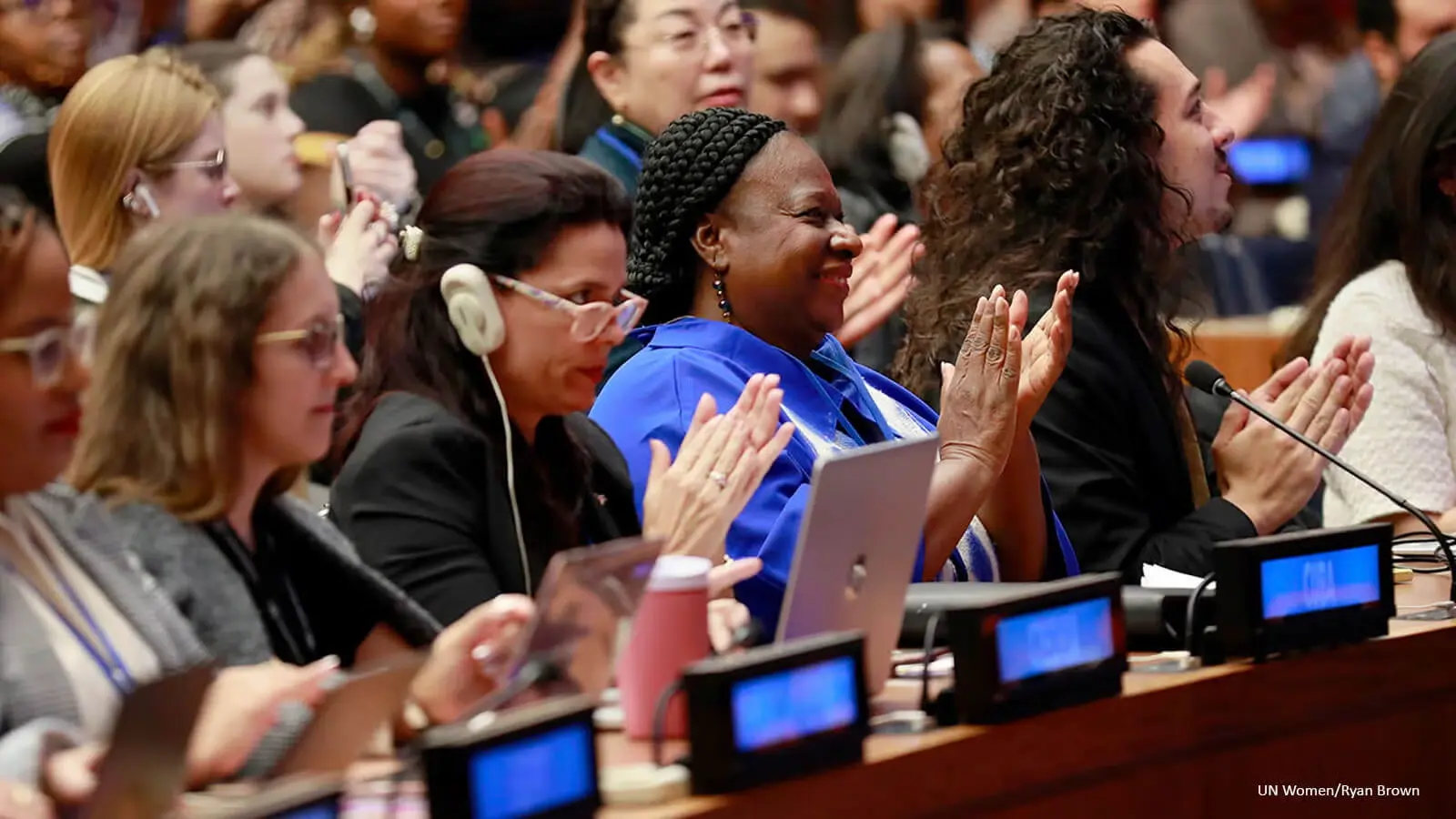
During the Commission’s annual two-week session, representatives of UN member states, civil society organisations and various UN agencies meet at UN headquarters in New York.